
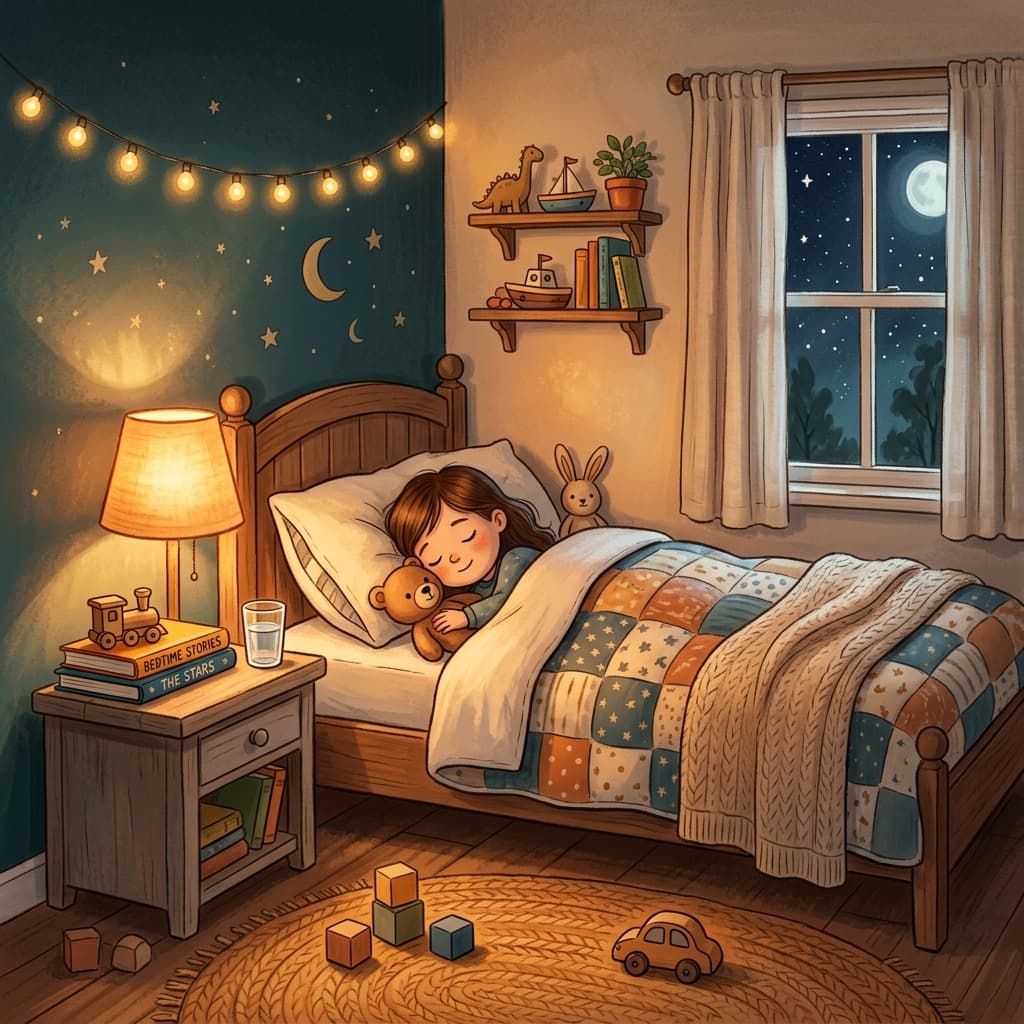
The bedtime routine that actually works for toddlers
If you’ve ever found yourself negotiating with a two-year-old at 9:00 PM about why they "need" another glass of water or one more rendition of The Wheels on the Bus, you know that logic doesn't live here.
Bedtime for toddlers isn't just about putting on pajamas and brushing teeth. It’s a complex psychological transition from a day of autonomy and exploration to a night of stillness. When that transition fails, we get meltdowns. When it succeeds, we get that elusive hour of quiet time we all crave.
Here is the routine we’ve found works best, based on developmental neuroscience and years of shared parenting experience.
The Battle of the Hormones: Cortisol vs. Melatonin
To understand why routines work, we have to look at two primary hormones: cortisol (the "alertness" hormone) and melatonin (the "sleep" hormone).
Throughout the day, a child's cortisol levels fluctuate. As evening approaches, the brain's pineal gland begins producing melatonin, signaling to the body that it is time to power down. However, unpredictable environments, loud noises, or sudden changes in routine can cause a "cortisol spike," which suppresses melatonin.
This is why the following routine is designed to biologically anchor your child and signal to their amygdala that it is safe to lower cortisol levels.
The 30-minute "Dimming" Phase
The biggest mistake most of us make is trying to switch from "High Energy" to "Sleeping" in five minutes. Toddlers need a ramp-down.
About thirty minutes before bed, dim the lights in the main living areas. Turn off loud toys and screens. The American Academy of Pediatrics (AAP) has extensively documented how the blue light emitted by screens mimics daylight, halting melatonin production completely. Furthermore, fast-paced video games and cartoons cause micro-spikes in dopamine and cortisol.
Transition to quiet play, like blocks or puzzles, while you start the first few steps of the physical routine.
The Sensory "Warm-Up"
A warm bath is a classic for a reason. The drop in body temperature after getting out of a bath is a biological trigger for sleepiness. But beyond the temperature, the bath is a predictable sensory event.
Keep it quiet. Use slow, predictable movements while drying them off and putting on pajamas. Avoid a battle over the "wrong" pajamas—if they want to wear their superhero cape over their onesie, let them. The goal is peace, not a fashion show.
The Power of "Narrative Wind-Down"
The classic bedtime story isn't just a cultural tradition; it is a neurological tool. A predictable, soothing narrative actively engages the brain in "active imagination," which requires a gentle, sustained cognitive focus that prevents the mind from racing.
But why does one book lead to sleep and another leads to "Again! Again!" and jumping on the bed? It’s all about the narrative arc. For the final story of the night, you want a "low-stakes" plot.
This is where MintMyStory can be a game-changer. Instead of a generic book, you can create a custom story that mirrors your child’s actual day:
- "Leo saw a big red truck today."
- "Leo ate three blueberries for lunch."
- "Now Leo’s toys are going to sleep."
Hearing their own name and their own day reflected in a calm, rhythmic narrative signals to their brain that the "Story of Today" is officially closed. Using MintMyStory's Edge-TTS narration, parents can even turn the screen brightness all the way down, or simply play the audio in a dark room.
The Final Two Choices
Toddlers crave control. Bedtime is a time where they feel they have none.
To bridge this gap, give them two specific, non-negotiable choices at the very end.
- "Do you want me to tuck in your left arm or your right arm first?"
- "Should we say goodnight to the teddy bear or the dinosaur last?"
These "Micro-Choices" give them a sense of autonomy without derailing the schedule.
Conclusion
There is no perfect routine that works every single night. Kids are human, and some days are just harder than others. But by focusing on a slow sensory wind-down and using personalized, low-stakes stories to close the day, you give your child the best chance at a peaceful night’s sleep.


