The Origin of the "Custom Saturday Stories" Tradition
As parents in 2026, we are all intimately familiar with "screen-time guilt." We know we want less digital noise and fewer algorithmic feeds for our kids. But let's be realistic: finding 30 minutes of high-quality, educational interaction that feels fun for the child—and doesn't require hours of Pinterest-level preparation from the parent—is incredibly difficult.
That’s why we started documenting and sharing the Custom Saturday Stories tradition.
What started as a small weekend experiment by a few MintMyStory early adopters has turned into a beloved weekly routine for hundreds of families. It’s a simple, four-step process that takes the "magic" of AI storytelling and pulls it off the screen, turning it into a physical, tactile treasure your child can hold, color, and read.
Here is exactly how you can implement the Custom Saturday Stories tradition in your own home this weekend.
Step 1: The "Co-Creation" Interview (5 Minutes)
The tradition begins on Saturday morning. Instead of handing your child a tablet while you make coffee, sit down together at the computer for exactly five minutes.
Ask them a simple prompting question: "What was the best thing you did this week?" or "If you could go anywhere today, where would we go?"
Maybe they went to the park and saw a funny squirrel. Maybe they are currently obsessed with garbage trucks. Maybe they wish they could visit the moon. Whatever their answer is, use that as the seed prompt for your story.
In MintMyStory, you type this into the generator. You ensure your child is selected as the main character, maintaining perfect visual consistency using our Character Anchoring technology.
Pro Tip: Always ask them to name a sidekick. Including their favorite stuffed animal, the family dog, or a sibling as a companion makes the story feel immediately "real" and personalized to them.
Step 2: The Print-and-Prep Phase
Once the story is generated, do not read it on the screen. This is the secret to the whole tradition. The screen is only the manufacturing plant; the product is physical.
Immediately download the high-quality PDF export.
We’ve optimized our PDF Storybook Export specifically for home printing. When you download the PDF, it’s formatted automatically for:
- Professional spread layout (ready for folding and stapling).
- High-contrast, clean text that is easy for early readers to track.
- Black-and-white or line-art modes (perfect for coloring!).
Print the story out on standard printer paper. If you have slightly thicker paper (like cardstock) for the cover, even better.
Step 3: The Assembly Line (15–20 Minutes)
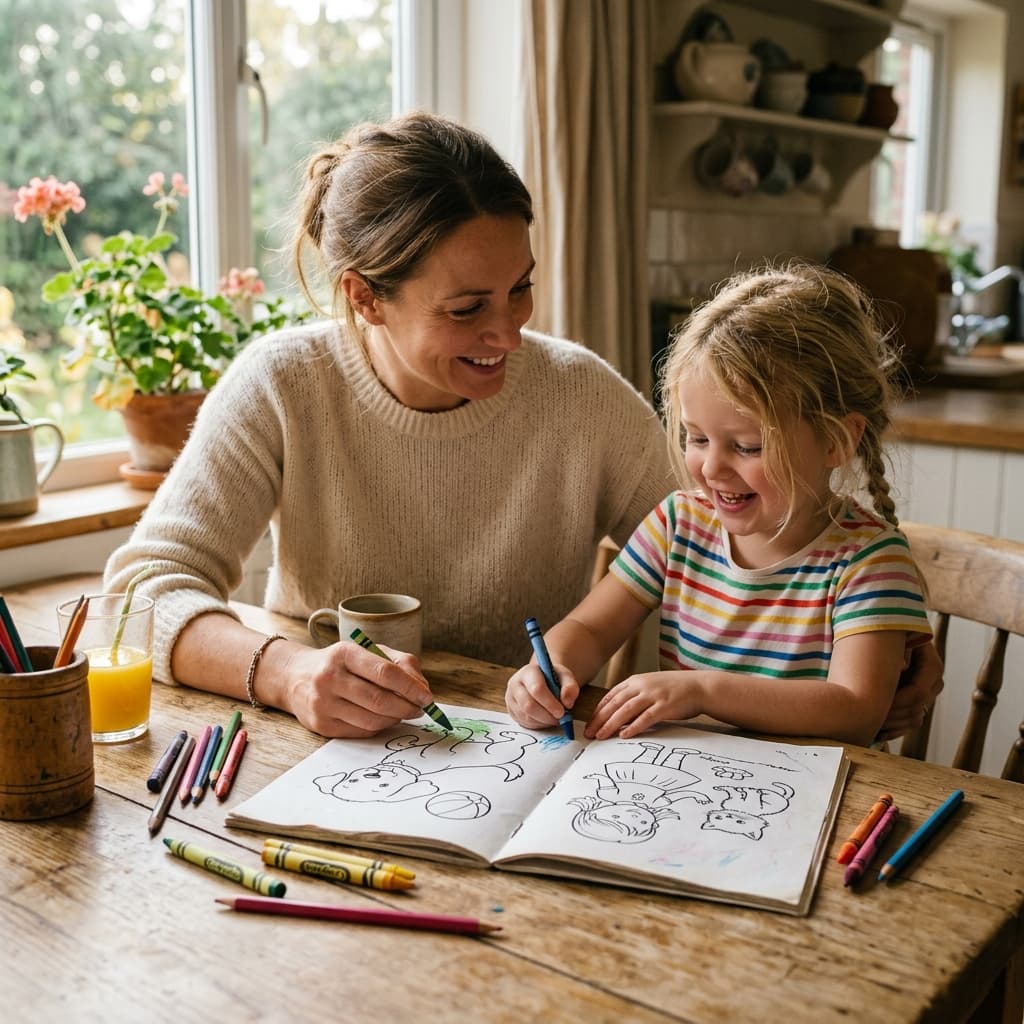
Clear off the kitchen table, grab the crayons, the stapler, and some tape. This is where the real magic happens.
- Coloring and Illustration: If you printed in line-art mode, let them color the characters. If you printed in full color, let them draw extra details in the margins. This gives them a profound sense of ownership. It isn't just a book bought from a store; it is their book that they manufactured.
- The Binding: Help them fold the pages and staple them together. We recommend putting three staples along the left edge. To make it feel official, cover the staples with a strip of colorful washi tape or masking tape to create a real "spine."
- The Cover Art: Let them draw their own cover art or write their name in giant letters on the front. Seeing their name printed as the "Hero" and writing their name as the "Co-Author" is a massive boost to their confidence.
Step 4: The Screen-Free Bedtime Bridge
The best part of this tradition happens 12 hours later. Because this story is now physical paper, it becomes a tangible reward, not just another digital file to swipe past.
When bedtime rolls around on Saturday night, the usual fight over turning off the iPad disappears. You don't have to convince them to read a book; they want to read the book they "made" with you that morning.
It creates a calm, focused bridge between the chaotic energy of the weekend and the quiet necessity of sleep. Reading a physical book together under a warm lamp signals the brain to release melatonin, unlike the blue light of a tablet which suppresses it.
The Neurological Benefits: Why This Works
We’ve seen parents report that "Saturday Stories" isn't just a fun craft; it has tangible developmental benefits:
- Accelerated Sight Word Recognition: Children learn to read faster when they are reading about things they actually experienced. If the story is about them and their dog "Buster," they will learn to recognize the word "Buster" almost immediately.
- Increased Attention Span: In a world of 15-second TikTok videos, asking a child to sit and focus on a book is hard. But because they helped build this specific book, their emotional investment is higher, naturally extending their attention span.
- Reduced Bedtime Anxiety: Predictable routines reduce cortisol (the stress hormone). Knowing that every Saturday ends with reading the "Saturday Story" gives anxious children a reliable, comforting anchor to their week.
The "Screen-Free Summer" Variation
When summer hits, the lack of structure can turn screens into the default babysitter. The Saturday Stories format scales up nicely into a summer reading project.
Instead of once a week, some parents do this every Tuesday and Thursday morning. They use it to document what the kid did at camp or on vacation. Over the course of the summer, the kid builds an entire box of physical, handmade books documenting their break. It keeps their reading skills sharp while school is out, and it gives them a physical artifact to bring to "show and tell" when classes start again in the fall.
Start the Tradition This Weekend
You don't need a massive budget or hours of free time to create meaningful literacy moments with your child. You just need five minutes of co-creation and a printer.
Ready to start your first Saturday Story? Click here to generate your child's first adventure.
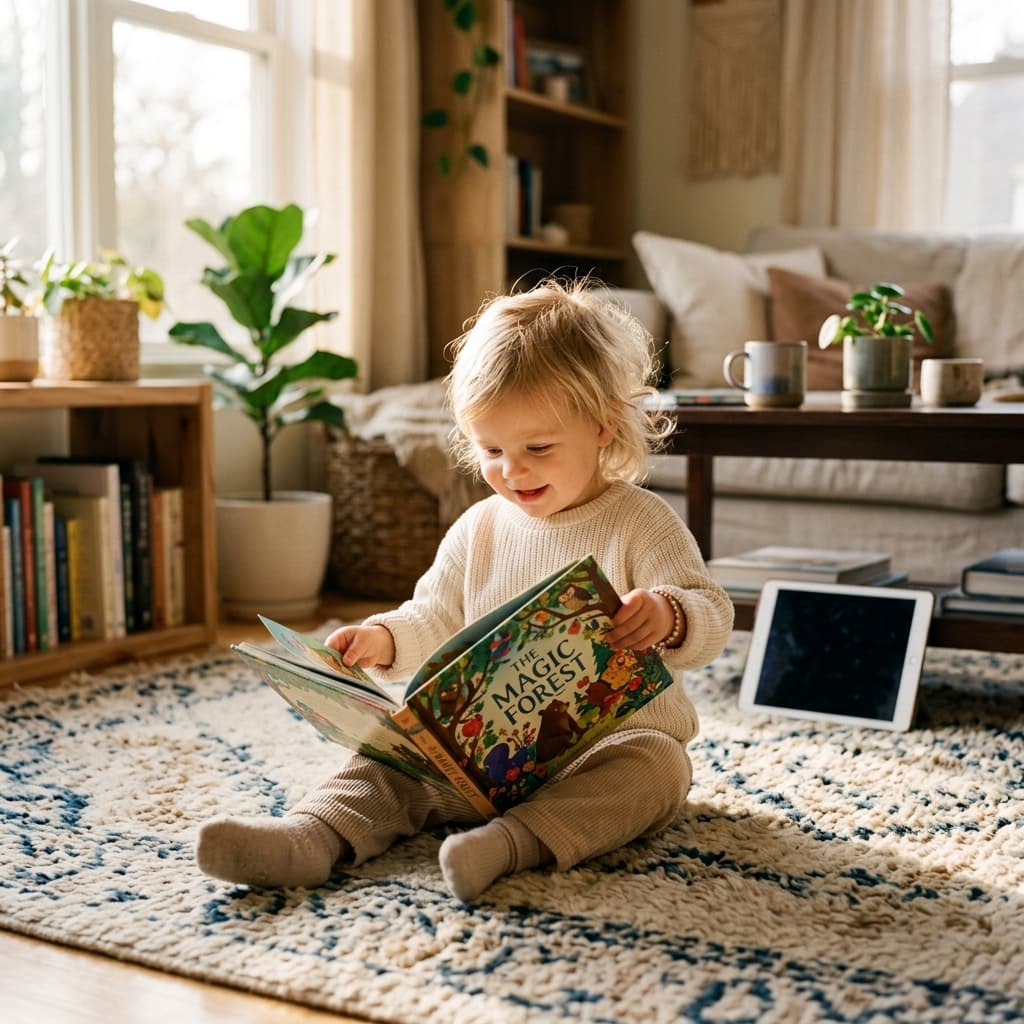
[!TIP] The Library Basket: Keep a specific basket or shelf in your living room dedicated only to these handmade Saturday Stories. Watching the basket fill up week after week provides a wonderful visual representation of the stories you've shared, and gives your child a library of their own creation to revisit anytime.